
Annyeonghaseyo, language explorers! If you're anything like I was when I first dreamed of living in Seoul, you're probably buzzing with excitement to learn Korean. But let's be real, diving into a new language can feel daunting, especially when you're trying to do it without breaking the bank. Well, get ready because you're about to discover a treasure trove of genuinely free resources that will kickstart your Korean language journey and have you chatting like a local (eventually!). This guide is packed with my insider tips and verified tools to help you navigate the beautiful complexities of Korean, all without spending a won.
Key Takeaways for Your Free Korean Language Journey
- Start with Hangeul, the Korean alphabet, which is incredibly logical and easy to learn.
- Utilize comprehensive websites like How to Study Korean and the King Sejong Institute for structured lessons.
- Leverage apps like Duolingo for daily practice and Anki for effective vocabulary memorization.
- Dive into YouTube channels such as Go Billy Korean and Seemile Korean for engaging video lessons.
- Boost your vocabulary with free PDF lists and immerse yourself in K-dramas and K-pop.
- Practice pronunciation by actively listening to native speakers and recording yourself.
- Develop a consistent self-study routine and set achievable, bite-sized goals.
Heads up: this post contains affiliate links. If you make a purchase through one, I may earn a small commission at no extra cost to you — thanks for supporting the blog!

Starting Your Korean Journey: Why Hangeul is Your Best Friend
Okay, let's talk about the very first step: Hangeul (한글). When I first arrived in Seoul, I was intimidated by the signs, but honestly, Hangeul is one of the most brilliant and learner-friendly alphabets out there. King Sejong the Great created it in the 15th century with the express purpose of being easy for everyone to learn, and it truly is! Unlike complex character-based systems, Hangeul is phonetic, meaning each character represents a sound, and they combine into syllable blocks. You can truly learn the basics in a single afternoon and be reading simple words by evening.
Cracking the Hangeul Code: Simple Steps to Success
To master Hangeul, begin by familiarizing yourself with the basic vowels and consonants. Many free online guides and apps break down each character, often comparing them to similar English sounds to help with recognition. Focus on how the simple shapes mimic the mouth's position when making the sound – it’s a game-changer!
Next, practice forming syllable blocks. Korean words aren't just a string of letters; they're grouped into neat, usually two- or three-character blocks. Websites like Good Job Korean offer free Hangeul courses with video lessons, quizzes, and printable PDF textbooks that guide you through this process, making it super engaging. Consistent writing practice, even just for 10-15 minutes a day, will solidify your recognition and recall.
Top-Tier Free Online Korean Lessons & Apps
Navigating the world of learning korean language resources for beginners free can feel overwhelming, with so many options popping up. But don't worry, I've sifted through them to bring you the best genuinely free tools that offer structured learning and effective practice. These resources are fantastic for building a solid foundation without spending a penny.

Comprehensive Websites for Structured Learning
For those who love a systematic approach, several websites provide in-depth, free courses. How to Study Korean is an absolute powerhouse, offering detailed explanations of grammar, extensive vocabulary lists, and audio recordings for nearly every word and sentence, from beginner to advanced levels. It's essentially a free online textbook that you can follow at your own pace. I still refer back to it for tricky grammar points!
Another excellent option is the King Sejong Institute's online learning platform. Funded by the Korean Ministry of Culture, Sports and Tourism, they provide free structured lessons, e-books, and videos focusing on speaking, listening, reading, and writing. They even offer online courses, often with registration periods, so keep an eye out!
Loecsen Korean is perfect for complete beginners looking to grasp conversational basics quickly. It offers interactive, phrase-based lessons with audio, Romanization, and English meanings, along with voice recognition technology to help you test your pronunciation. It's great for getting comfortable speaking simple phrases right from the start.
Explore Free Korean Resources →
Engaging Apps for Daily Practice
When you're out and about, language learning apps are your best friends. Duolingo is widely known for its gamified approach, making daily practice fun and addictive. Its Korean course starts with Hangeul basics and gradually builds vocabulary, perfect for establishing a consistent learning habit. It might not dive deep into grammar, but it's brilliant for getting those first few hundred words and phrases cemented in your mind.
For serious vocabulary building, Anki is an "unsexy powerhouse" as some call it. This free flashcard app uses spaced repetition, showing you cards right before you're about to forget them, which is scientifically proven to be the most efficient way to memorize new words. You can download pre-made Korean decks, often with audio, to save yourself time.
To practice speaking with native Koreans, apps like HelloTalk and Tandem connect you with language exchange partners. The free tiers allow for text and voice exchanges, offering invaluable real-world practice and cultural insights. Speaking of apps, don't forget to check out my post on Must-Have Korean Apps for Life in Seoul for more everyday essentials!
Demystifying Korean Grammar for Beginners
Korean grammar sometimes gets a bad rap for being "difficult," but I promise you, it's incredibly logical once you grasp the foundational concepts. The biggest difference for English speakers is often the word order: Korean typically follows a Subject-Object-Verb (SOV) structure, unlike English's SVO. Once you wrap your head around that, many other pieces start falling into place.

Essential Grammar Concepts to Master
As a beginner, focus on core concepts like particles. These small suffixes attach to nouns and pronouns to indicate their grammatical role in a sentence (e.g., topic marker, subject marker, object marker). Understanding these is crucial for forming coherent sentences. You'll also want to get comfortable with basic verb conjugations, especially for politeness levels, as these are fundamental to Korean social interaction.
Don't try to memorize every single rule at once. Instead, learn grammar through example sentences and real-life usage. When you encounter a new grammar point, try to create at least three of your own sentences using it. This active practice helps reinforce how the grammar works naturally in conversation.
Where to Find Free Grammar Explanations
Once again, How to Study Korean shines for its comprehensive and clear explanations of korean grammar for beginners, building concepts gradually from the ground up. They break down complex ideas into manageable lessons, making it less intimidating.
YouTube is another treasure trove. Channels like Learn Korean with Go Billy Korean offer extensive video series that explain grammar points with clarity and plenty of examples. Many native Korean speakers on YouTube also provide free lessons, often with printable worksheets to help you practice. Additionally, sites like My Korean Lesson offer free worksheets for various grammar patterns, which are great for applying what you've learned.
Building Your Korean Vocabulary Lists Effectively
Having a robust vocabulary is like having more colors on your artist's palette – it allows you to express yourself more vividly and understand more nuanced conversations. For beginners, the key is to focus on high-frequency words and build from there. Don't try to learn every word in the dictionary overnight!
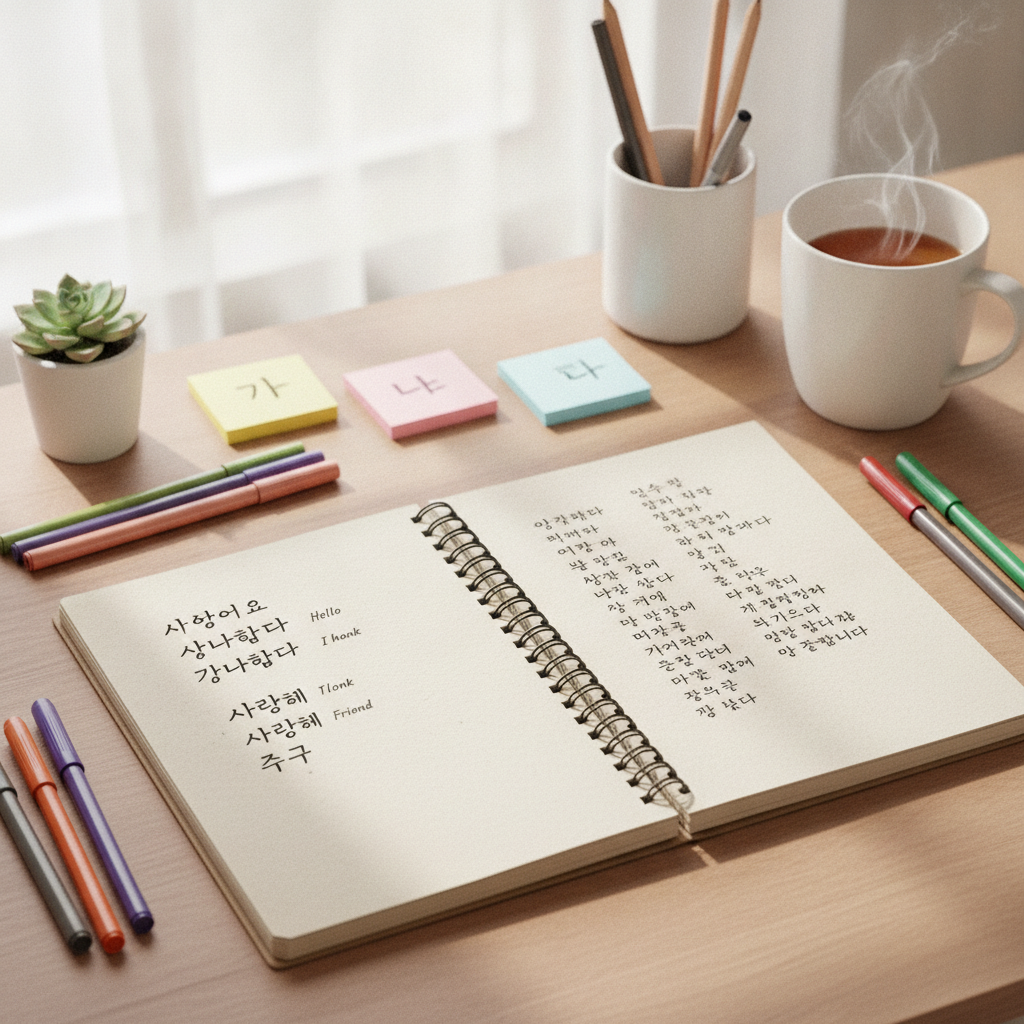
Smart Strategies for Vocabulary Acquisition
Learning words by theme can be incredibly effective. Grouping vocabulary related to food, travel, daily activities, or family helps you remember them in context. Flashcards, both physical and digital (like Anki), are your best friends for active recall and spaced repetition.
The Naver Dictionary is an indispensable tool. It provides not just definitions but also example sentences, audio pronunciation, and grammar notes, giving you a full picture of how a word is used. I use it constantly, even after years of living here, to check nuances and find natural phrasing.
Free Resources for Korean Vocabulary Lists
Several websites offer free, downloadable korean vocabulary lists. Tomi Korean provides a free printable PDF with 430 basic Korean words grouped by category, complete with audio files to aid pronunciation. Similarly, Linguajunkie has free PDF flashcards for the first 120 common Korean words, perfect for new learners. Study Stack also hosts a plethora of user-generated flashcards, matching games, and quizzes for various Korean vocabulary topics.
Beyond explicit lists, immerse yourself! Watching K-dramas, listening to K-pop, and reading webtoons (Korean digital comics) are fantastic ways to pick up natural vocabulary in context. Start with subtitles in your native language, then switch to Korean subtitles as you progress. You'll be surprised how quickly you start recognizing words and phrases you've learned.
Perfecting Your Hangeul Pronunciation Guide
You've learned Hangeul, you're tackling grammar, and your vocabulary is growing – now it's time to make sure you sound great! Korean pronunciation has its quirks, but with focused practice, you can definitely nail it. It’s not just about individual sounds, but also the rhythm and intonation of sentences.

Key Elements of Korean Pronunciation
Pay close attention to Korean vowels and consonants, as some don't have direct equivalents in English. For instance, the 'eu' (ㅡ) vowel can be tricky, often described as a flat 'uh' sound made with a relaxed tongue. Similarly, distinguishing between aspirated (with a puff of air), unaspirated, and tense consonants is vital for clear communication. Korean has a unique phenomenon called "batchim" (final consonants) where a consonant's sound can change depending on the following syllable. This is something you'll pick up with consistent listening.
Korean also has its own melody and intonation patterns that differ from English. Mimicking native speakers is incredibly important here. Don't be afraid to exaggerate your mouth movements when practicing, especially for vowels, as this can help make your sounds clearer.
Tools to Improve Your Pronunciation
YouTube is, once again, your best friend for a comprehensive hangeul pronunciation guide. Channels dedicated to teaching Korean often have specific videos breaking down each sound, demonstrating mouth positions, and providing ample practice. Go Billy Korean and Seemile Korean are excellent for this. Listen to native speakers pronouncing individual letters and words multiple times until you can hear the subtle distinctions.
A simple yet effective technique is recording yourself speaking Korean and then comparing it to native audio. You'll often catch mistakes you didn't even realize you were making! Some apps, like Loecsen, even incorporate voice recognition technology into their speaking drills, providing immediate feedback on your pronunciation.
The Art of Korean Language Self Study
Learning a language is a marathon, not a sprint, and mastering the art of korean language self study is crucial for long-term success. The good news is that with dedication and the right strategies, you can make incredible progress even without formal classes. It's all about building habits and staying motivated.
Setting Realistic Goals and Staying Motivated
Consistency truly is everything. It's far more effective to study for 30 minutes every day than for three hours once a week. Try to set aside a dedicated time each day, whether it's first thing in the morning with your coffee or during your lunch break. Start with small, actionable goals, like mastering Hangeul in two weeks, learning 10 new vocabulary words daily, or studying one dialogue from an online lesson. These small wins will keep your motivation high.
Keeping a Korean journal, even if you just write a sentence or two a day, can significantly reinforce what you're learning. Don't worry about perfection; the goal is consistent practice and application of new grammar and vocabulary.
Creating Your Own Immersion Environment
Even if you're not living in Seoul (yet!), you can create an immersive environment at home. One of my favorite tips is to start "thinking in Korean." Try to describe your daily activities or surroundings in simple Korean sentences, even if it's just in your head. This trains your mind to process information in the language and quickly reveals gaps in your vocabulary.
Label objects around your home with their Korean names on sticky notes. This visual reinforcement is incredibly powerful for vocabulary acquisition. And of course, continue to immerse yourself in Korean media. Watch K-dramas with Korean subtitles, listen to K-pop, and explore Korean YouTube channels or podcasts. The more you expose yourself to the language in authentic contexts, the faster your ears will adjust and your comprehension will improve.
Ready to Start Your Free Korean Language Adventure?
Learning Korean has been one of the most rewarding experiences of my life, opening doors to a vibrant culture and incredible people. And the best part? You don't need to spend a fortune to get started. With the plethora of high-quality, free resources available online, you have everything you need to begin your journey right now.
So, grab a cup of coffee, choose a resource, and take that first exciting step. Don't be afraid to make mistakes; they're just part of the learning process. Before you know it, you'll be understanding your favorite K-drama lines, singing along to K-pop, and maybe even planning your own adventure to Seoul. 화이팅 (Hwaiting)!